
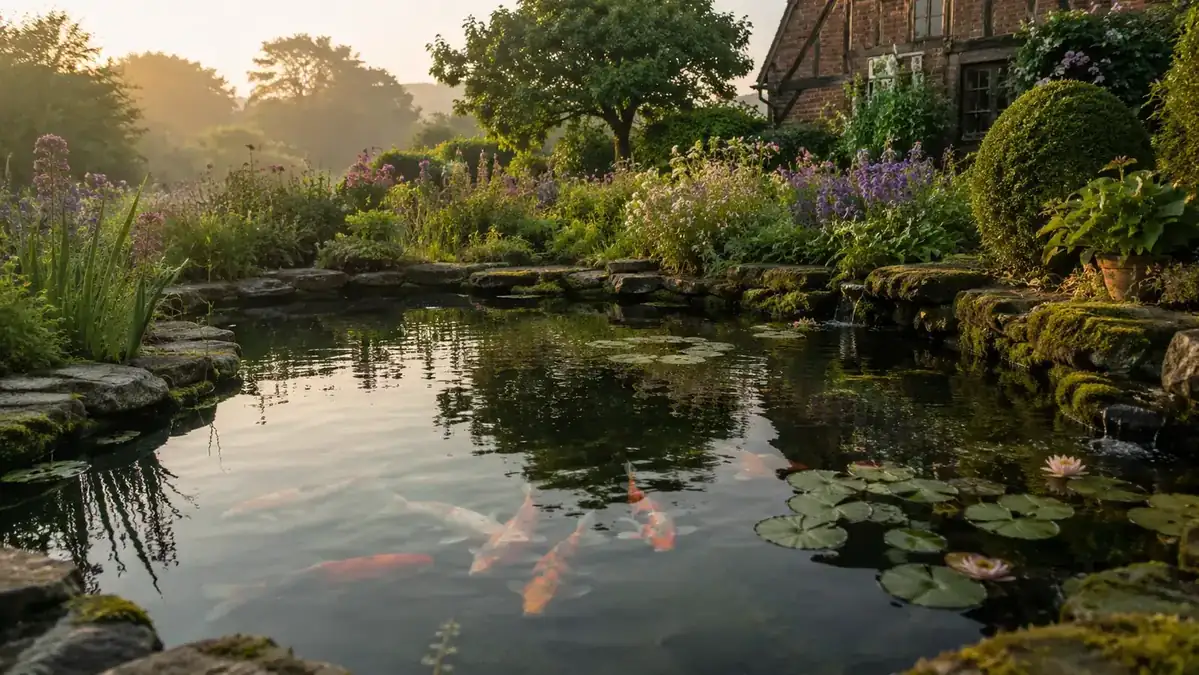
I have been running a koi pond in my garden for thirty-one years, and I can tell you that the single most common mistake I see is this: people buy a perfectly good pump, drop it in the water without a second thought, and then wonder why the pond goes green by June, why the fish look lethargic on hot afternoons, or why the waterfall trickles when it should sing. The pump is not the problem. The setup is. Get the placement, the pipe run, and the flow rate right from the start, and you will spend the rest of the summer watching your fish, not chasing algae. Get it wrong, and no amount of good intentions will save you from a murky, oxygen-poor pond.
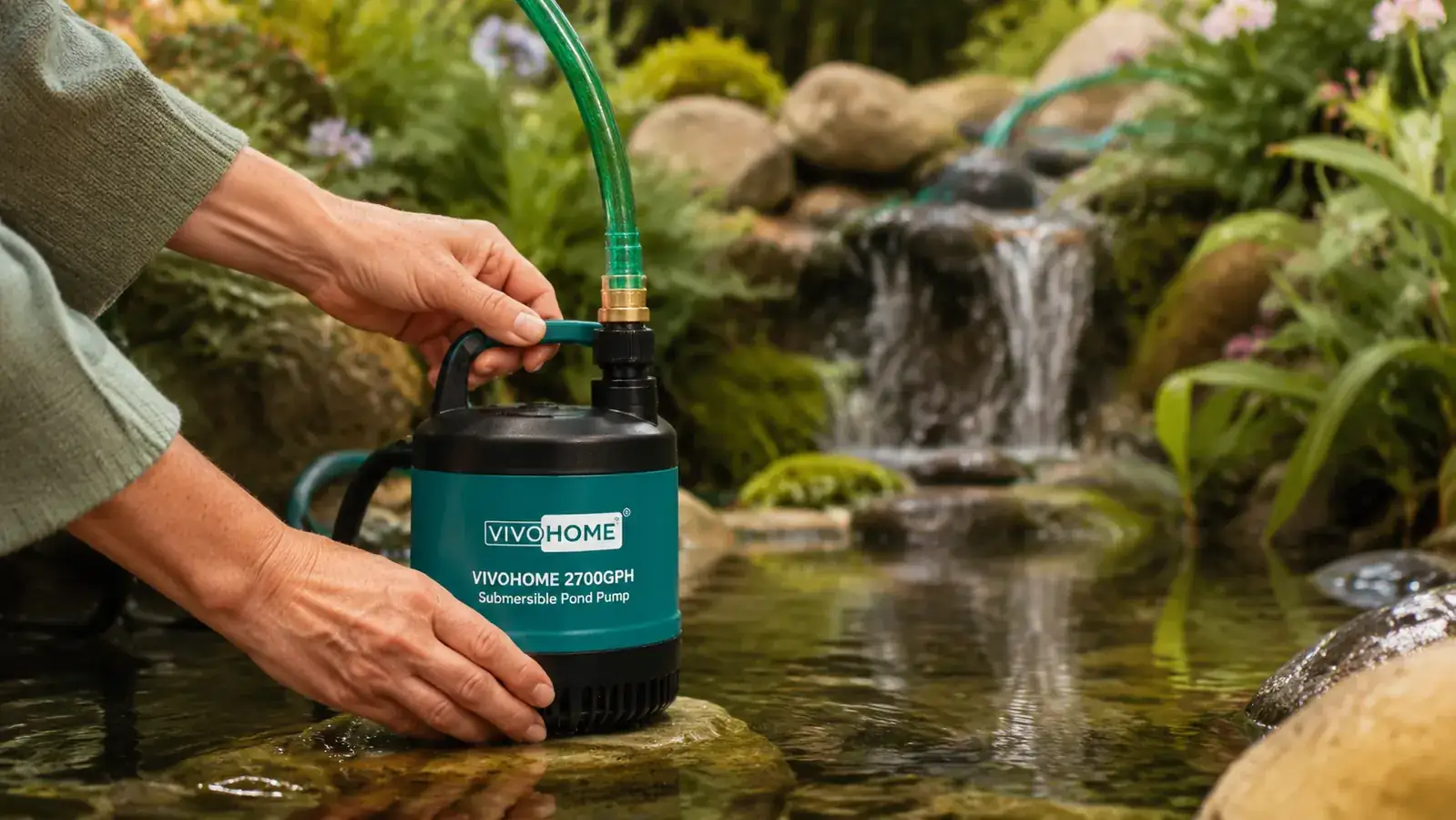
The guide below is how I set up my own pump each spring after the winter rest, and it is the same advice I give to everyone who writes to ask why their pond is struggling. The pump I have used for the past two seasons is the VIVOHOME 2700GPH submersible, rated at 120 watts, which is what I recommend for ponds between 1,500 and 3,500 gallons. If yours is smaller, the principles are identical, only the numbers change.
Your koi are breathing through that pump. Make sure it is up to the job.
The VIVOHOME 2700GPH submersible pump handles ponds up to 3,500 gallons, runs at 120W, and includes multiple outlet fittings to match your existing pipe diameter. Check today's price on Amazon before you start your setup.
Amazon Check Today's Price on Amazon →Before You Begin: Two Numbers You Must Know
Before you even unbox the pump, sit down with a rough sketch of your pond and work out two figures. The first is your pond volume in gallons. For a simple oval or rectangular pond, length (feet) times width (feet) times average depth (feet) times 7.48 gives you gallons. My main pond is 14 feet by 9 feet by 3 feet average depth, which works out to roughly 2,830 gallons. Write that number down.
The second number is your required turnover rate. For a koi pond, you want to turn the entire water volume over at least once per hour, and ideally twice. So my 2,830-gallon pond needs a pump rated for a minimum of 2,830 GPH at the head height of my waterfall. Head height is the vertical distance from the surface of the water to the point where the water exits at the top of your waterfall or filter return. My waterfall drops about four feet above water level. At 4 feet of head, the VIVOHOME 2700GPH delivers around 2,100 GPH, which is acceptable for my stocking level. If you keep more fish or have a taller waterfall return, size up.
Step 1: Choose the Right Position on the Pond Floor
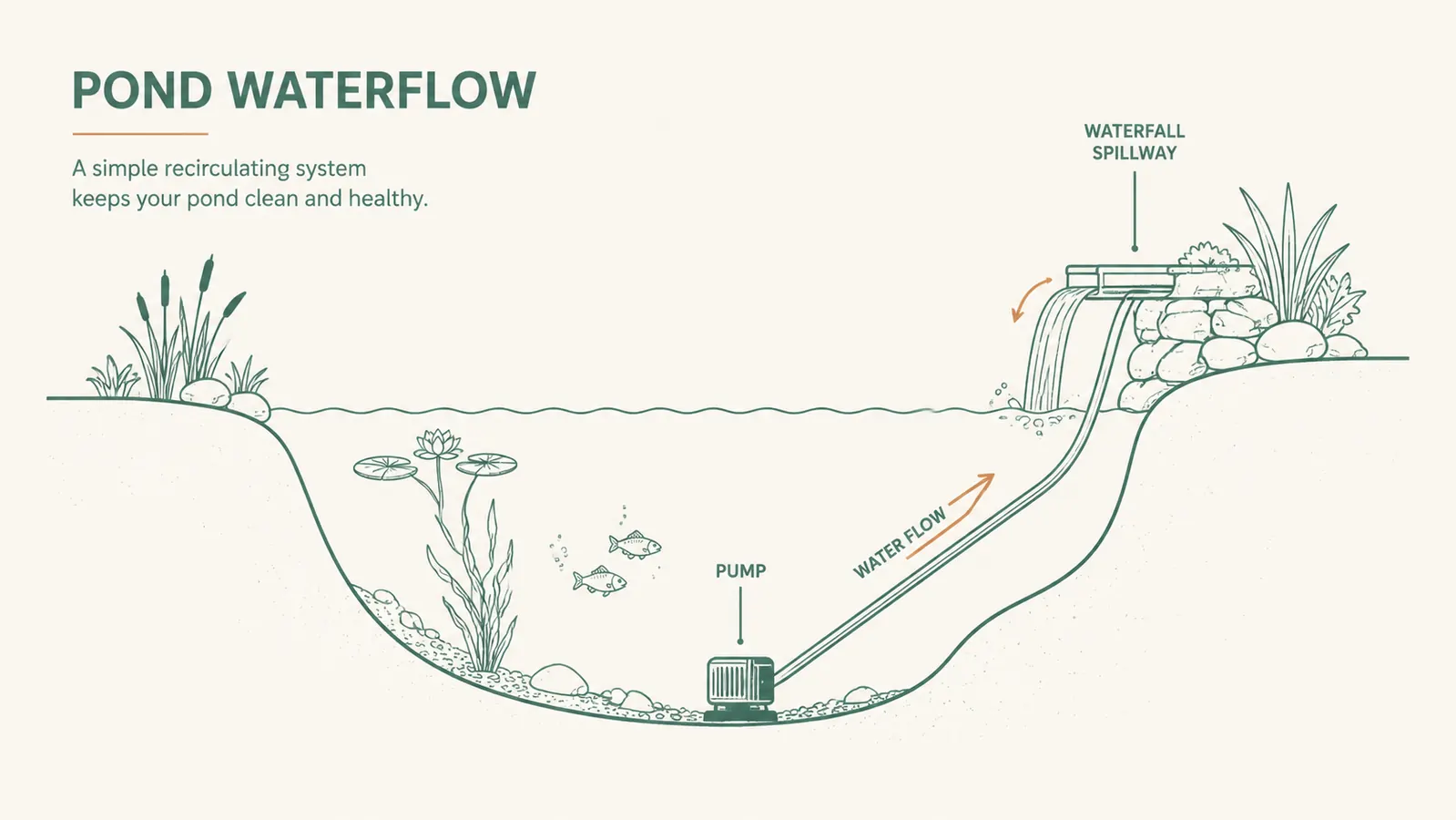
Place the pump at the deepest point of the pond, as far from the waterfall return as the layout allows. Both of these details matter. The deepest point holds the most oxygen-depleted, warmest water in summer, and it is where debris and waste settle. Pulling water from there means the pump is dealing with the worst water first, sending it up to your filter before it has a chance to foul the rest of the pond.
Distance from the waterfall return is equally important. You want the water to travel across the full pond before it circulates back, creating a gentle current that carries surface debris toward the pump intake rather than short-circuiting the flow and leaving dead corners. In a rectangular pond, the pump goes in one far corner and the return goes in the other. In an irregular shape, aim for the longest possible diagonal.
Never rest the pump directly on bare liner. Place it on a flat stone or a plastic mesh platform raised an inch or two off the floor. This stops the intake from sucking up fine silt and gravel, which clogs the impeller and reduces flow rate faster than almost anything else. I use a piece of kitchen chopping board cut to size, weighted with a smooth cobble on top to stop it shifting in the current.
Step 2: Connect the Tubing at the Correct Diameter
The VIVOHOME pump ships with adaptors for 1.2-inch, 1.5-inch, and 2-inch outlet diameters. Use the largest diameter that your pipe run will accommodate. Reducing the pipe to a smaller bore is the single most common cause of poor pump performance. Every time you step the pipe down, you increase friction and reduce the flow rate at the point where it matters most: the waterfall return.
Use reinforced pond hose rather than thin-wall tubing. Thin-wall hose kinks on bends, and a kinked pipe at three feet underwater is not something you want to discover at ten o'clock on a summer evening with your fish gasping at the surface. I run 1.5-inch reinforced hose on my current setup and have had no issues over two full seasons. Secure all connections with stainless jubilee clips, not cable ties. Cable ties perish in UV and release microplastics into the water over time.
Step 3: Route the Pipe Up the Pond Wall Without Sharp Bends
Once the pump is settled on its platform and the hose is fitted, you need to route the pipe from the pond floor up over the wall to the filter or waterfall box. The golden rule here is no bend tighter than a 90-degree sweep. Sharp right-angle bends reduce flow by as much as 30 percent at that point in the run. Use sweeping elbow fittings where you need a direction change, not hard right-angle push-fit elbows.
Where the pipe exits the pond, lay it in a gentle slope rather than running it straight up the wall. I drape mine over the stone edging at the shallowest angle the garden allows, then tuck it behind the waterfall feature. This keeps the hose out of sight and avoids the sharp fold that comes from dropping a vertical run straight over a right-angle wall edge.
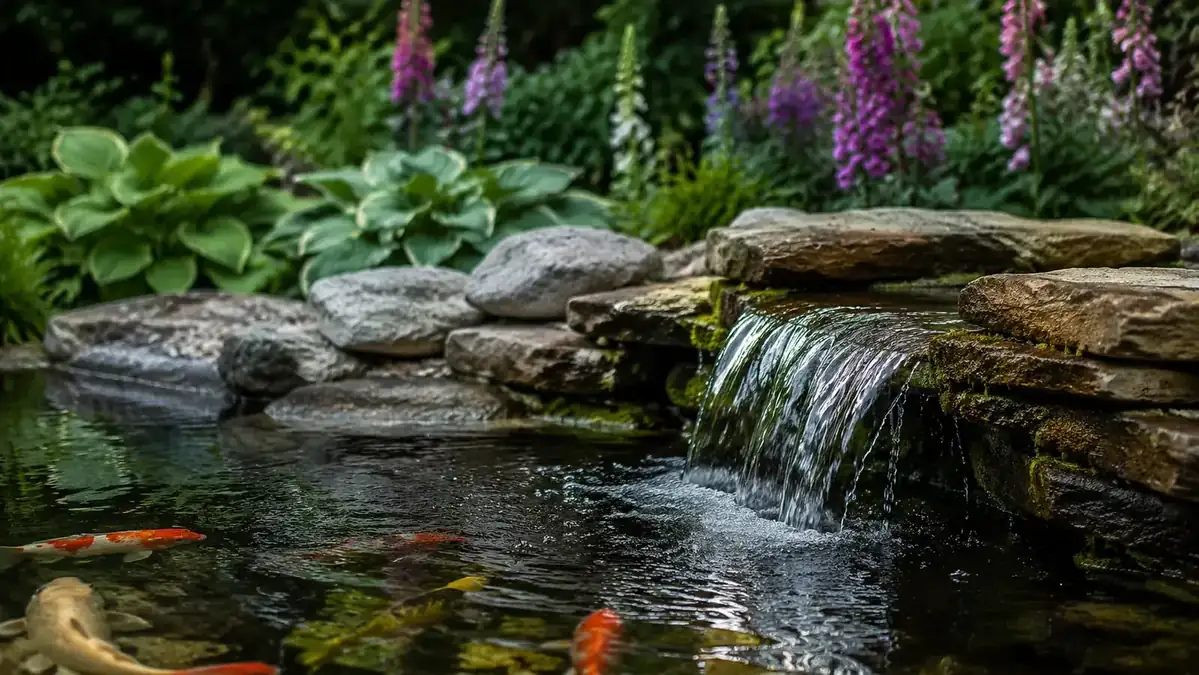
Finally, make sure the end of the pipe at the waterfall return terminates below the waterfall lip, not above it. If the pipe end is above the water level of the filter box, the pump will push air as well as water during low-water periods and you will hear a gurgling noise that signals an air lock forming. Below the waterfall lip, always.
Step 4: Run the Power Cable Safely to the Outdoor Socket
Pond electrics need to be treated with absolute respect. This is not a job for improvised extension leads trailing across the lawn. In the UK and most of Europe, pond pumps must be connected to an outdoor socket protected by a Residual Current Device, known as an RCD, which disconnects power within 30 milliseconds of a fault. The pump cable runs underwater, and a compromised cable can electrify your pond water and kill every fish instantly. Every year I see forum posts from devastated keepers who lost an entire pond this way.
Route the cable along the edge of the pond wall rather than across the lawn where a lawnmower can clip it. Use a cable conduit or bury it at least 18 inches deep if it must cross grass. If your existing outdoor socket does not have an RCD, have a qualified electrician install one before you plug in any pond equipment. The VIVOHOME pump cable is approximately 16 feet, which is adequate for most installations, but if you need to extend it, use only a proper weatherproof outdoor extension rated for continuous submersible use.
Step 5: Prime the Pump and Check Flow Rate Before Releasing It
Submersible pumps should never run dry, even for a few seconds. Before you connect the power, submerge the pump fully and hold it underwater for 30 seconds so the impeller housing fills completely. Then, with the pump still submerged, switch it on at the socket. You will hear it start immediately and see flow appearing at the waterfall return within a few seconds. If the return trickles rather than flows, or if you hear a rattling sound from the impeller, switch off immediately and check for a kinked hose or air lock in the pipe run.
Once the pump is running steadily, time how long it takes to fill a 10-litre watering can from the return flow. A 10-litre fill in 8 seconds means a flow rate of roughly 1,700 GPH, which gives you a useful real-world figure to compare against the manufacturer's rating and to recheck after cleaning. Note this number in a small garden diary. After six months, if the same test takes 12 seconds, your foam pre-filter is due a clean.
Note your starting flow rate on day one. After six months, if the same test takes noticeably longer, your pre-filter foam is telling you something. A clean pump is the difference between koi that glow and koi that merely survive.
What Else Helps: Building Good Habits Around the Pump
Setting up the pump correctly is a morning's work. Keeping it running well is a matter of small habits repeated every few weeks. The foam pre-filter that covers the pump intake needs rinsing in a bucket of pond water (never tap water, which kills the beneficial bacteria living in the foam) every four to six weeks in summer, and every eight weeks in winter when fish activity and waste production are both much lower. Do not squeeze the foam dry. Rinse it gently until the water running through it runs fairly clear, then replace it.
Every autumn, before water temperatures drop below 10 degrees Celsius, lift the pump out and inspect the impeller for debris. A small piece of leaf or a strand of pond weed caught in the impeller will reduce flow rate by 20 percent or more without making any noise that would alert you to the problem. I keep a small stiff toothbrush by the pond specifically for cleaning the impeller housing. Rinse the whole unit with pond water, check the cable for any signs of wear, and return it to the pond before the first proper frost.
In winter, if your pond is deeper than 3 feet and you have koi rather than goldfish, keep the pump running on a reduced setting if your model allows it, or move it to mid-water depth so it gently circulates without disturbing the warmer layer of water that sits at the bottom of the pond. Koi need that temperature differential through the coldest months. Disrupting it stresses them at exactly the time their immune systems are at their lowest.
Two articles you may find useful alongside this guide: my full two-season review of the VIVOHOME pump, which covers reliability and noise in detail, and a piece on the ten most important reasons to run a powerful pump in a koi pond, which explains the biology behind why flow rate matters so much for fish health. Both are on this site and worth a read before you finalize your setup.
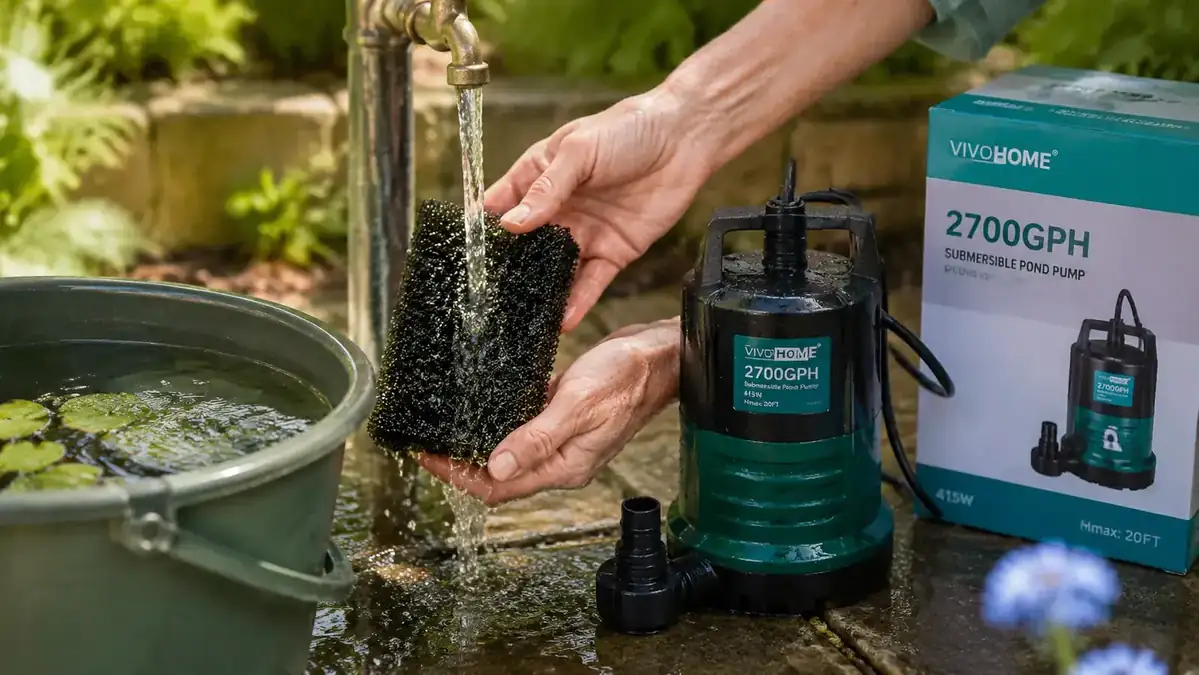
A well-placed pump running well is the foundation everything else in a koi pond builds on.
The VIVOHOME 2700GPH submersible pump has run reliably through two full seasons in my garden pond, handling temperatures from freezing February mornings to a 36-degree August heatwave. If you are sizing a pump for a pond between 1,500 and 3,500 gallons, this is the one I would recommend without hesitation. Check today's price on Amazon and see whether it is right for your setup.
Amazon Check Today's Price on Amazon →