
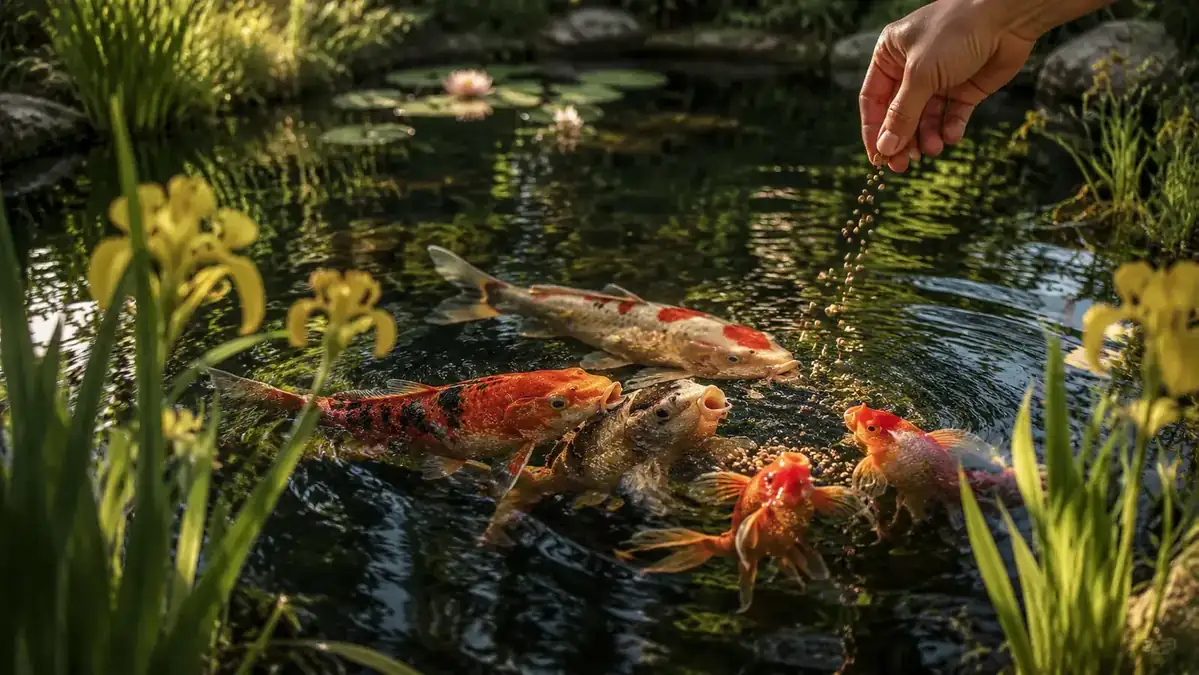
I have been keeping koi for just over thirty years, and in that time I have fed them everything from supermarket pond sticks to specialist wheatgerm pellets ordered from a koi farm in Dorset. Most food does the job. But last spring, after a winter where my water had been murkier than I liked and one of my older fish came through looking a little pale, I decided to try CrystalClear Staple Pond Fish Food for a full season. Not a few weeks. A full summer, from late April when the water reached twelve degrees Celsius, right through to the end of September. My pond is roughly 3,500 gallons, and I have eight koi and four fantail goldfish. The oldest koi is a fifteen-year-old Kohaku I call Biscuit, and she is the one whose colour I watch most carefully when I change food.
What I found surprised me in a couple of ways, and not all of them were the ones the packaging suggests you should care about. This is what I noticed after six months of daily feeding.
The Quick Verdict
A genuinely well-made staple pellet that feeds koi and goldfish cleanly, supports good colour over a full season, and does not fog the water the way cheaper sticks do. The price per pound is fair. The only real drawback is pellet size: the medium pellets are slightly large for smaller goldfish, which means some food is wasted on fish that mouth it and spit it out.
Amazon Check Today's Price →Your fish ate up another bag of cheap pond sticks and your water is still green. There is a reason for that.
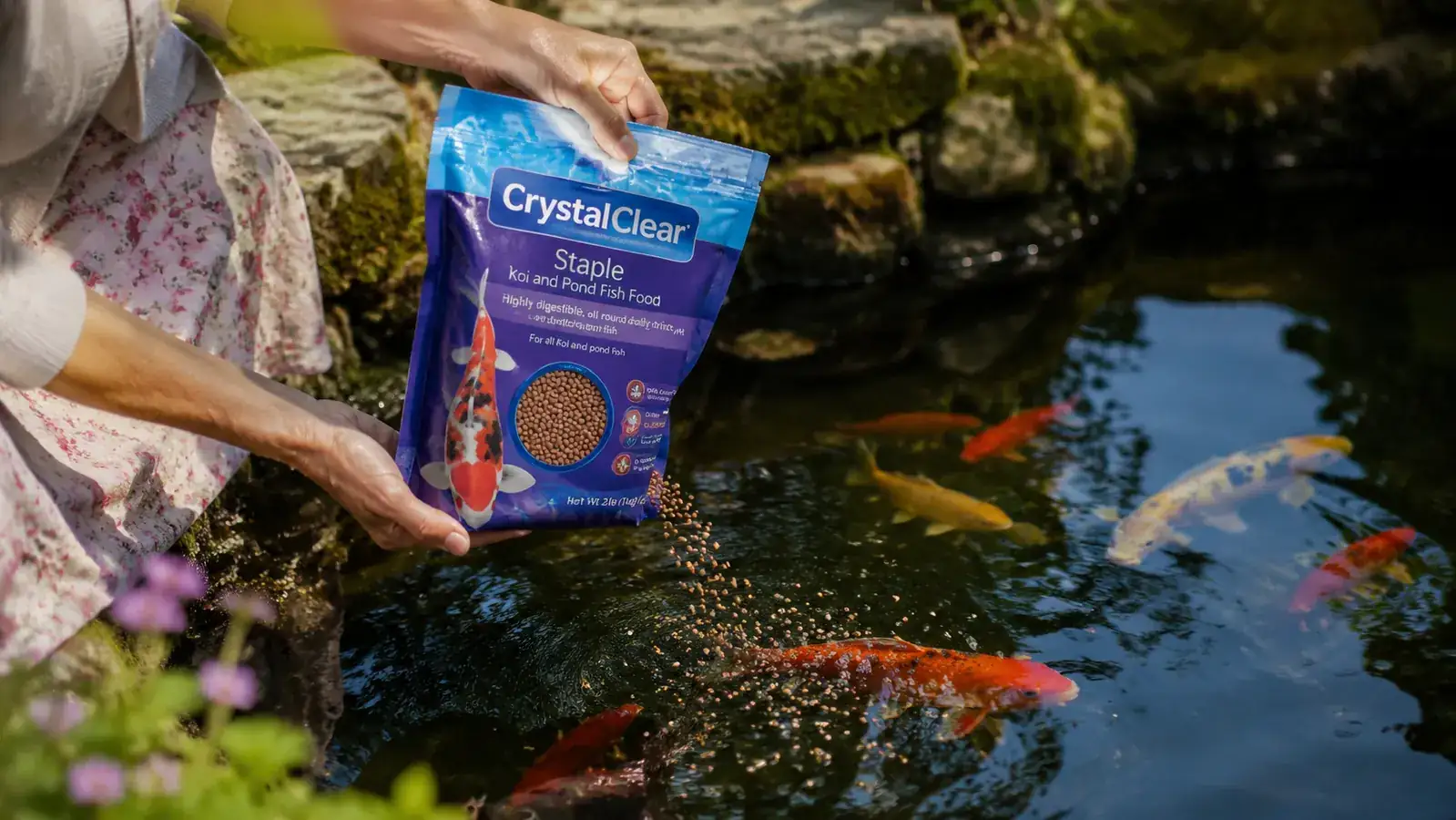
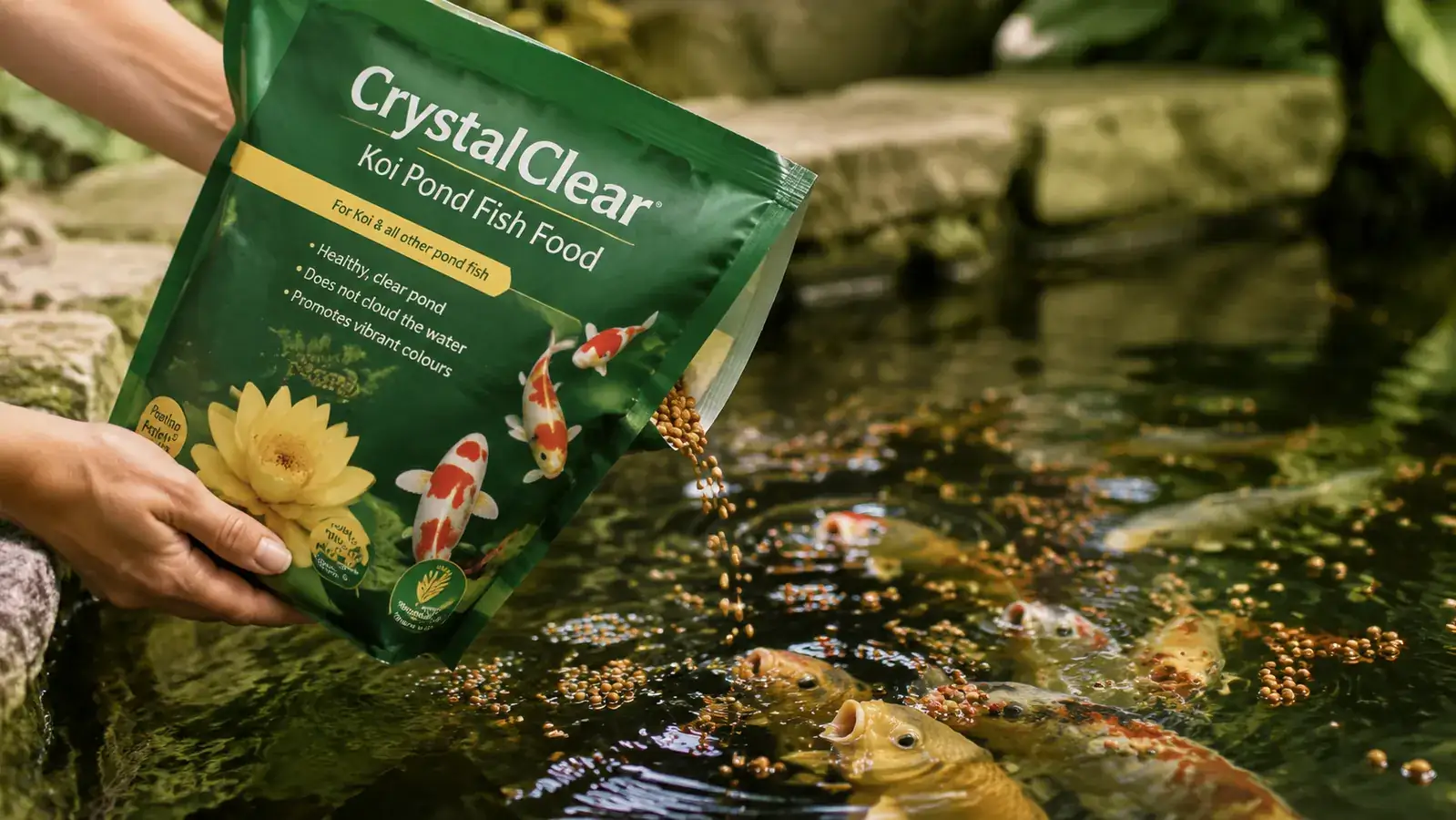
CrystalClear Staple pellets float, so you can see exactly how much your fish eat and remove any uneaten food before it sinks and rots. That single habit, made easy by the right food, makes a bigger difference to water clarity than almost anything else.
Amazon Check Today's Price on Amazon →How I Used It: The Setup for This Review
I switched over to CrystalClear Staple gradually at the start of May. Over the course of a week I mixed it with the old pellets at a ratio of roughly half and half, then moved to CrystalClear alone by the second week. This is the transition I use with any new food because koi digestive systems are slower to adapt than most people realise, and a sudden change can cause bloating or loose droppings that cloud the water badly.
I feed once in the morning and once in the early evening during the warmer months, using roughly a tablespoon and a half per feeding for my twelve fish. The feeding instructions on the bag say to give only as much as your fish can consume in five minutes, which is sensible advice and matches what I have always done. I kept a small notebook by the pond through the summer, noting things like water temperature, feeding amount, any visible changes in colour or behaviour, and whether there were pellets left floating after five minutes. That notebook is the basis of most of what I am about to tell you.
I did not change any other variable during this period. Same filtration, same UV clarifier, same water change schedule of about ten percent per week. The pump and filter I use have not changed in several years. So whatever differences I noticed can be attributed to the food with reasonable confidence.
Ingredients and Nutritional Profile: What Is Actually in the Bag
CrystalClear Staple lists crude protein at a minimum of thirty-two percent, crude fat at four percent, and crude fibre at a maximum of three percent. The main protein source is fish meal, which is what you want for a staple summer food when koi metabolism is running at its highest. Wheat flour appears further down the ingredient list, which gives the pellet its buoyancy and makes it float reliably. There is also wheat germ oil, which supports the carotenoid pigments that give koi their colour.
Thirty-two percent protein is appropriate for a warm-weather staple food. It is not a growth food at the level of specialist koi diets that push protein above thirty-eight percent, but for fish that are already mature and not being raised for show, it is exactly the right level. I would not use it as a wheatgerm transition food in autumn, when you want lower protein to prepare fish for winter. But from May through September, the protein and fat levels match the energy demands the fish actually have.
The pellets themselves are a medium size, roughly six millimetres in diameter. They are consistently shaped, which matters more than it sounds. Poorly made pellets break apart when they hit the water, releasing a cloud of fine particles that your filter cannot always catch quickly enough. CrystalClear pellets stay whole for well over five minutes while floating. I left some in the water for a deliberate test of fifteen minutes and they still had their shape, though they were slightly softened by that point.
Colour and Condition: What Changed Over Six Months
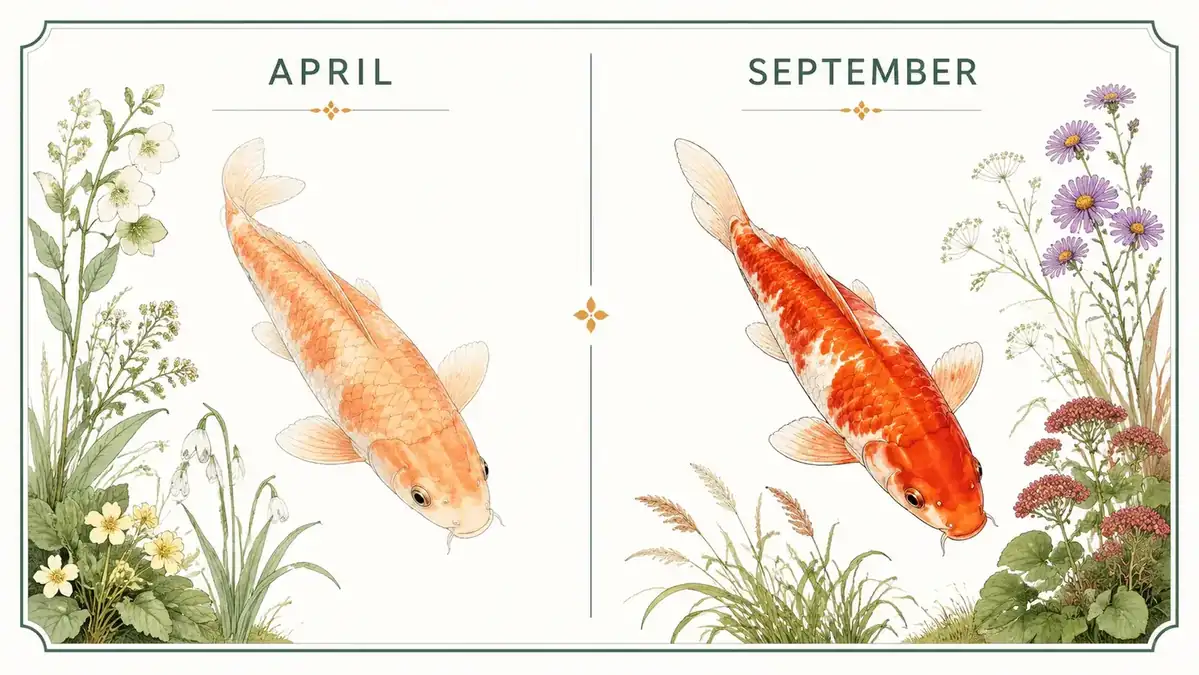
This is the section most people will want to skip to. Biscuit, my oldest Kohaku, started the summer with a slightly washed-out orange that I had been quietly concerned about since the previous autumn. By the end of July, the orange patches on her back had deepened noticeably, and by September the demarcation between white and orange was crisper than I have seen it in a few years. She is fifteen years old, and colour tends to soften in older fish, so I was genuinely pleased.
By the end of July, Biscuit's orange had deepened noticeably. She is fifteen years old, and colour tends to soften in older fish. I was genuinely pleased.
The other koi showed similar improvements in varying degrees. My two Showa developed stronger contrast between the red, black, and white sections, which is partly just summer sun and warm water, but I have had summers before where that contrast stayed flat. My two younger koi, a Taisho Sanke and a Yamabuki Ogon, both visibly grew about three centimetres over the season, which is roughly in line with what I would expect for fish their age and water temperature.
The goldfish are harder to assess for colour because fantails are naturally variable. But two of the four seemed more evenly coloured by autumn than they were in spring, with less of the faded patches you often see around the belly. I cannot claim that as a definitive result, but it was a consistent observation.
Water Clarity: The Difference a Floating Pellet Makes
This was the result I had not specifically expected, and it is the one I would highlight most to anyone comparing floating pellets against pond sticks. Pond sticks, even good ones, begin to soften the moment they hit the water. A fish that mouths a stick and rejects it, which they do constantly when the flavour or texture is off, releases a small cloud of softened food particles. Multiply that by twelve fish and two feedings a day and you have a slow but steady input of dissolved organic matter into your water column. Your filter bacteria deal with it eventually, but it takes time and it taxes the system.
CrystalClear Staple pellets stay intact while the fish eat them. When a fish rejects one, the pellet floats off intact and I can net it out. Over the course of the summer, I noticed that my water was measurably clearer by July than it had been in previous Julys. My weekly ammonia and nitrite tests stayed at zero throughout, which they usually do, but the visual clarity of the water was better. The green tinge that develops in summer from algae suspended in the water column was lighter than usual, which I attribute partly to less dissolved organic matter feeding the algae.
I want to be careful not to overclaim this. Water clarity in a pond is affected by many things: sunlight, temperature, fish stocking density, the condition of your filter media, whether you have marginal plants shading the surface. My conditions did not change dramatically year over year. But the trend was clear enough that I noted it in my book in mid-July and again in September.
Where CrystalClear Staple Falls Short
The pellet size is the main limitation. Six millimetres is fine for koi, including younger ones over about twenty centimetres, but it is genuinely too large for small fancy goldfish. My four fantails range from ten to eighteen centimetres, and the two smaller ones spent an obvious amount of time mouthing pellets, breaking off pieces, and releasing crumbs. Those crumbs sink, your fish do not eat them off the bottom reliably, and they end up feeding bacteria rather than fish. If your pond is primarily goldfish or smaller fish, I would look for a smaller pellet size or a different formulation.
The bag itself is the other minor gripe. The two-point-two pound bag has a fold-over top rather than a resealable zip. After a couple of weeks of opening and refolding, the top loses its grip and the bag stays open. I started transferring the pellets into a lockable plastic tub after the first month, which is an easy solution, but it is an unnecessary extra step for what is otherwise a well-made product.
The price per pound is fair for the quality. It is not the cheapest pond food you can find, but the cheapest options tend to be high in fillers that cloud your water and do little for colour or condition. When you factor in the reduced wasted food, the cost difference narrows considerably.
What I Liked
- Pellets float and stay intact, making it easy to see exactly how much fish are eating and remove uneaten food before it sinks
- Colour enhancement is real and visible over a full summer, particularly in mature Kohaku and Showa
- Thirty-two percent protein is appropriate for warm-water feeding from May through September
- Consistent pellet shape with no crumbling on contact with water
- Noticeably less impact on water clarity compared to pond sticks
- Fish accept it readily, even fish that are sometimes picky during food transitions
Where It Falls Short
- Medium pellet size (approximately six millimetres) is too large for small fancy goldfish under fifteen centimetres
- Bag uses a fold-over top rather than a resealable zip, requiring a separate storage container after the first few weeks
- Not suitable as an autumn wheatgerm food because protein is too high for cooler water temperatures
- A premium price compared to basic pond sticks, though the quality difference justifies it for serious koi keepers
Alternatives I Considered
I looked at Tetra Pond Sticks before settling on CrystalClear, which is the food I had used previously. Tetra Pond Sticks have been around a long time and they are easy to find in garden centres, which is a practical advantage if you run out unexpectedly. But the sticks soften quickly in warm water and my fish were inconsistent about eating them in one go. I have written a direct comparison if you want to look at both options side by side. See my piece on CrystalClear Staple versus Tetra Pond Sticks.
I also considered a specialist colour-enhancing food, but those tend to be expensive and are designed for fish being prepared for show competitions. My fish are companions, not competitors. A well-made staple food that happens to support colour naturally is exactly what I need, and CrystalClear fits that requirement.
Who This Food Is Right For
If you have a pond with koi of any size, or goldfish over about fifteen centimetres, and you want a reliable summer staple food that supports colour, produces minimal water cloudiness, and allows you to monitor your fish's appetite easily, CrystalClear Staple is a very good choice. The floating pellet format is not just a convenience feature: it is a meaningful tool for observing your fish's health. A koi that is not coming to the surface for food is often a koi that is unwell, and a floating pellet makes that observation possible in a way that sinking food does not.
If you feed koi through the seasons and want to understand how to adjust diet as water temperature changes, I have written a full guide on how to feed koi properly through every season, which covers when to switch to wheatgerm in autumn and how to read the signs that your fish need more or less food.
Who Should Skip It
If your pond is mostly small fancy goldfish or young fish under fifteen centimetres, the pellet size will cause more waste than you want. Look for a pellet labelled as small or mini rather than medium. If you are managing a pond in cooler northern climates and your water temperature drops below ten degrees Celsius for much of the season, this food is also not the right choice for the shoulder months. At those temperatures, koi need a low-protein wheatgerm diet that is much easier to digest. CrystalClear Staple is a warm-water summer food, and using it outside that window does not serve your fish well.
And if your primary concern is finding the cheapest possible pond food, you will find less expensive options. They will likely cloud your water more and do less for condition and colour, but they will feed your fish. If budget is the overriding factor, there are more economical choices.
Six months of daily feeding. Clearer water. Better colour on a fifteen-year-old Kohaku. That is the honest result.
CrystalClear Staple is not magic. It is a well-made floating pellet with the right protein level for summer feeding and ingredients that support colour naturally. If that is what you need, it will not disappoint.
Amazon Check Today's Price on Amazon →