
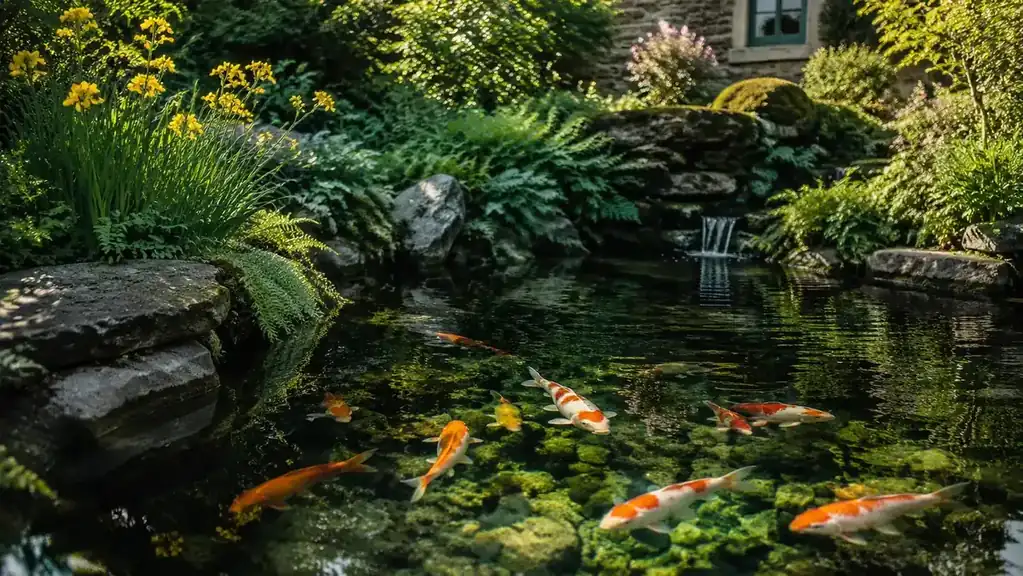
The pump questions are always the same, and they always arrive in June, just when your koi need good water the most. The water looks green. The fish are hanging near the surface. The pump you bought last spring is barely making a ripple. A small pump does not just underperform. It lets your pond stagnate, and a stagnant koi pond is a pond that is asking for trouble.
I have been keeping koi for thirty-two years. In that time I have run perhaps fifteen different pumps, from inexpensive imports to respected brand names. When I set out to compare the VIVOHOME 2700GPH submersible pump against the TetraPond Garden Pump, I was not looking for a winner in theory. I was looking for the pump I would actually put in a pond holding 1,400 gallons of water with eight koi ranging from four to eleven pounds. That is the test that matters.
| Feature | VIVOHOME 2700GPH | TetraPond Garden Pump |
|---|---|---|
| Flow Rate (max) | 2,700 GPH | ~1,350 GPH |
| Power Draw | 120W | ~75W |
| Best Suited For | Koi ponds 800-3,000 gal | Ornamental features, small ponds |
| Max Head Height | 16.4 ft | ~10 ft |
| Cord Length | 16.4 ft | ~6 ft |
| Submersible | Yes (fully) | Yes (fully) |
| Noise Level | Low hum, minimal surface agitation | Quiet at low flow, louder at max |
| Build Material | Durable plastic housing, ceramic shaft | Plastic housing, impeller motor |
| Warranty | 12 months | Varies by retailer |
| Amazon Rating | 4.4 stars (1,302 reviews) | Widely available, mixed koi reviews |
The Short Answer
If your koi pond holds between 800 and 2,500 gallons and you want water that turns over properly, the VIVOHOME 2700GPH is the clearer choice. The TetraPond Garden Pump is not a bad product. But it was designed with ornamental water features in mind, and the difference shows when you put real koi in real water and ask both pumps to do the same job.
Your koi need water that actually moves. See if the VIVOHOME 2700GPH is in stock.
With 2,700 gallons per hour at 120W, this is the pump I use in my own 1,400-gallon pond. Runs continuously, stays quiet, and handles the British summer without complaint.
Amazon Check Today's Price on Amazon →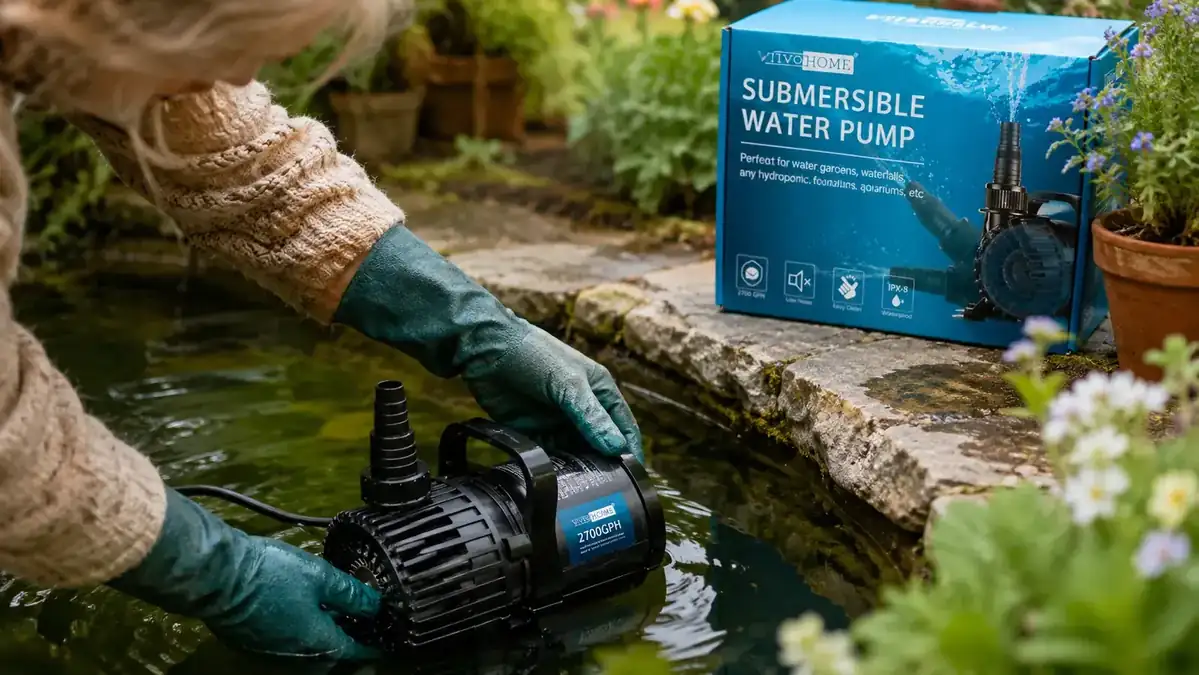
Where the VIVOHOME 2700GPH Wins
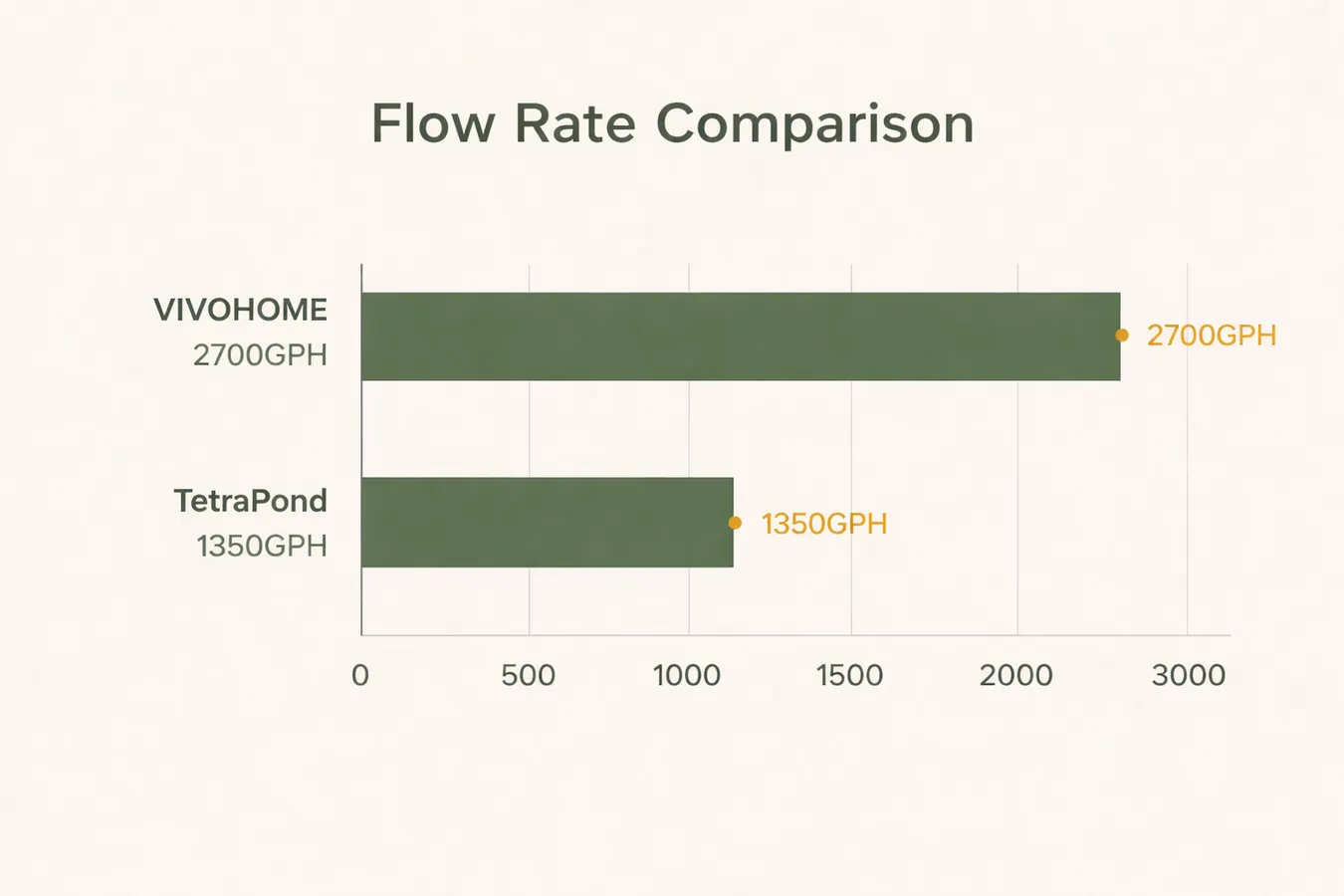
Flow rate is where this comparison effectively ends, if you keep serious koi. A healthy koi pond should turn its full volume over at least once per hour, and ideally twice. In a 1,400-gallon pond, that means you need 1,400 to 2,800 gallons per hour of pump capacity before accounting for head loss from tubing length and filter resistance. The VIVOHOME, rated at 2,700 GPH at zero head, gives you real working capacity of roughly 1,800 to 2,000 GPH in a typical setup. That is enough. The TetraPond, rated at roughly half that flow, leaves you struggling in any pond over 800 gallons.
The cord length matters more than most buyers realise. The VIVOHOME comes with a 16.4-foot cord, which is long enough to reach most pond edges without an extension lead. The TetraPond ships with a significantly shorter cord, and running extension leads outdoors near water introduces real safety concerns as well as the inconvenience of managing them through a flower border. Small practical details like this separate a pump built for outdoor pond use from one adapted for it.
Where the TetraPond Holds Its Own
The TetraPond Garden Pump is a thoughtfully made product for what it was designed to do. In a small ornamental pond, a patio water feature, or a bog garden with a 300 to 600 gallon volume and goldfish rather than koi, it performs reliably. The Tetra brand name carries genuine weight in the pond hobby, and the pump reflects that heritage in its build quality. If your water garden is primarily a landscape feature rather than a koi habitat, the TetraPond is a reasonable choice.
Energy use is also worth considering honestly. The TetraPond draws roughly 75 watts against the VIVOHOME's 120W. Over a full year of continuous running, that difference amounts to approximately 394 kilowatt hours, which at typical UK electricity rates adds up to a meaningful annual cost. If your pond is small enough that the TetraPond can actually keep up with circulation demands, that efficiency gap is a real factor. The problem is that most koi ponds are not small enough.
A koi pond that turns its volume over twice an hour stays healthy through a heatwave. One that barely manages once, on a warm August day, will show it in the fish.
Flow Rate: Why the Numbers Matter for Koi
Koi are not decorative fish that happen to live in a pond. They are large, active animals that produce considerable waste and demand well-oxygenated water. An adult koi of eight or ten pounds produces more ammonia than a dozen small goldfish. If your pump cannot move water fast enough through your biological filter, ammonia spikes, dissolved oxygen drops, and you begin to see fish gasping, clamped fins, or worse. None of this happens dramatically. It creeps up on you through July and August when surface evaporation, warmer water, and algae blooms all converge.
The VIVOHOME's 2,700 GPH rating gives it genuine headroom. When I fitted mine to a Hozelock Bioforce 6000 filter and ran it through a 1.5-inch pipe with 9 feet of head, I measured flow at the outlet of roughly 1,900 GPH. That was enough to turn my 1,400-gallon pond over comfortably each hour and keep the waterfall feature running at a healthy cascade. At the same head, a 1,350 GPH pump would deliver somewhere around 900 GPH. In a 1,400-gallon pond, that means less than one turnover per hour in real conditions, not the theoretical ideal.
Noise and Running Conditions
My pond is in a sheltered corner of the garden, roughly eight feet from a stone bench where I tend to sit on summer evenings with a cup of tea. Noise matters to me. The VIVOHOME produces a steady, low-frequency hum that is audible when the pond is otherwise still, but it sits well below the sound of the waterfall it is running. After a few weeks I stopped noticing it entirely. I have heard reports of units developing a rattle after extended use, which tends to indicate debris has reached the impeller, and cleaning resolves it. That is a maintenance reality with any submersible pump, not a flaw specific to VIVOHOME.
The TetraPond is quiet at lower flow settings, which is part of its appeal for a garden feature where visual calm matters. At maximum output, some users report increased vibration noise. For a koi pond that needs to run at or near maximum continuously, the VIVOHOME's consistent noise profile is actually the more predictable companion.
Build Quality and Longevity
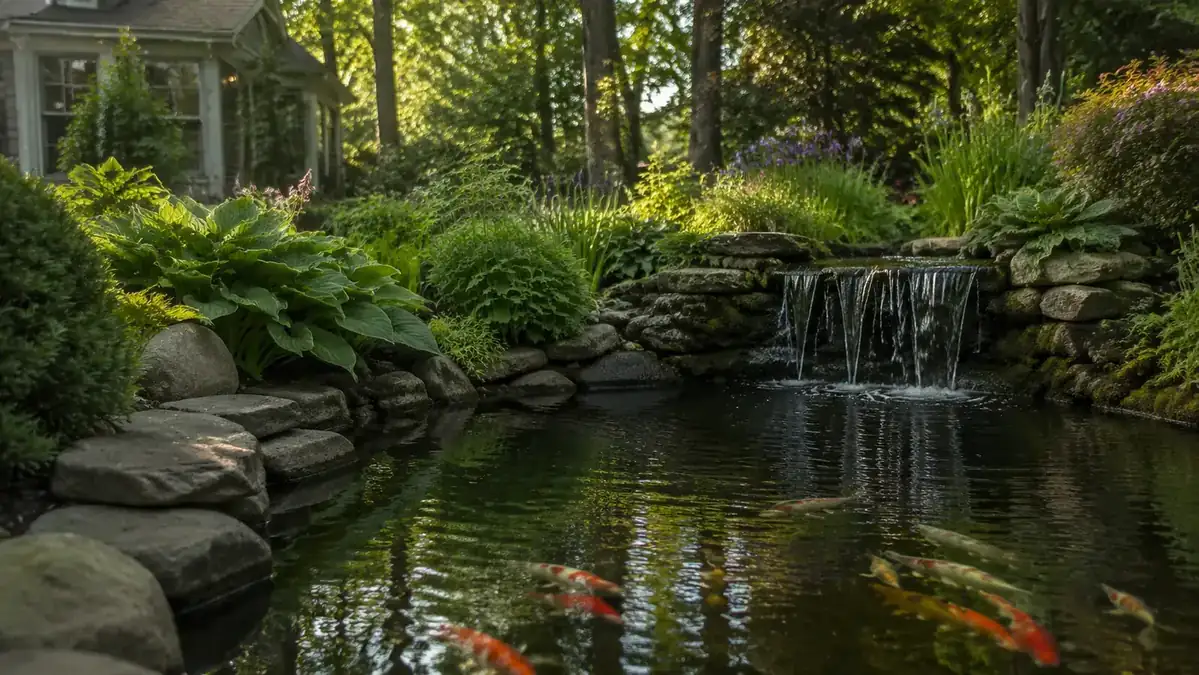
The VIVOHOME uses a ceramic shaft, which runs cooler and lasts longer than a standard metal-on-plastic bearing under continuous submersion. I have had mine running without interruption since April, and there has been no sign of heat stress, no reduction in output, and no unusual vibration. The housing is solid plastic that feels genuinely robust. Submersible pumps live a hard life, sitting at the bottom of a pond through rain, frost, algae, and leaf tannins. A ceramic shaft is not a marketing specification. It is the detail that separates a pump that lasts two seasons from one that lasts six.
The TetraPond is also well-built for its intended purpose. Tetra has been making aquatic products since the 1950s and their quality control is consistent. The concern with longevity is less about component quality and more about whether running the pump at the upper end of its capacity for months at a stretch, as you would in a koi pond, shortens its life relative to more comfortable operating conditions. Any motor runs better with headroom.
Who Should Buy the VIVOHOME
The VIVOHOME 2700GPH is the right pump if your pond holds 800 gallons or more, you keep koi or goldfish rather than purely ornamental fish, you run a pressurised filter that requires a strong inlet flow, or you want a waterfall or stream feature that needs genuine head pressure to function properly. It is also a sensible choice if you have experienced algae problems, surface scum, or fish health issues that you suspect are circulation-related. Improving water movement is frequently the first and most effective intervention.
Who Might Prefer the TetraPond
The TetraPond is better suited to a small, lightly stocked ornamental pond of 300 to 600 gallons, a patio water feature or container pond with one or two small fish, or a garden where the visual and acoustic atmosphere of the pond matters more than the biology of the fish. If you are a newcomer to garden water features and are not yet certain whether you will commit to koi keeping, the TetraPond is a gentler starting point. It is a product that can be outgrown as your pond ambitions grow, and that is not a criticism.
Thirty years of keeping koi has taught me one thing about pumps: more flow is almost always better.
The VIVOHOME 2700GPH has run my pond through two summers without complaint. If your koi are your priority, this is where I would start. See today's price on Amazon and check current availability.
Amazon Check Today's Price on Amazon →