
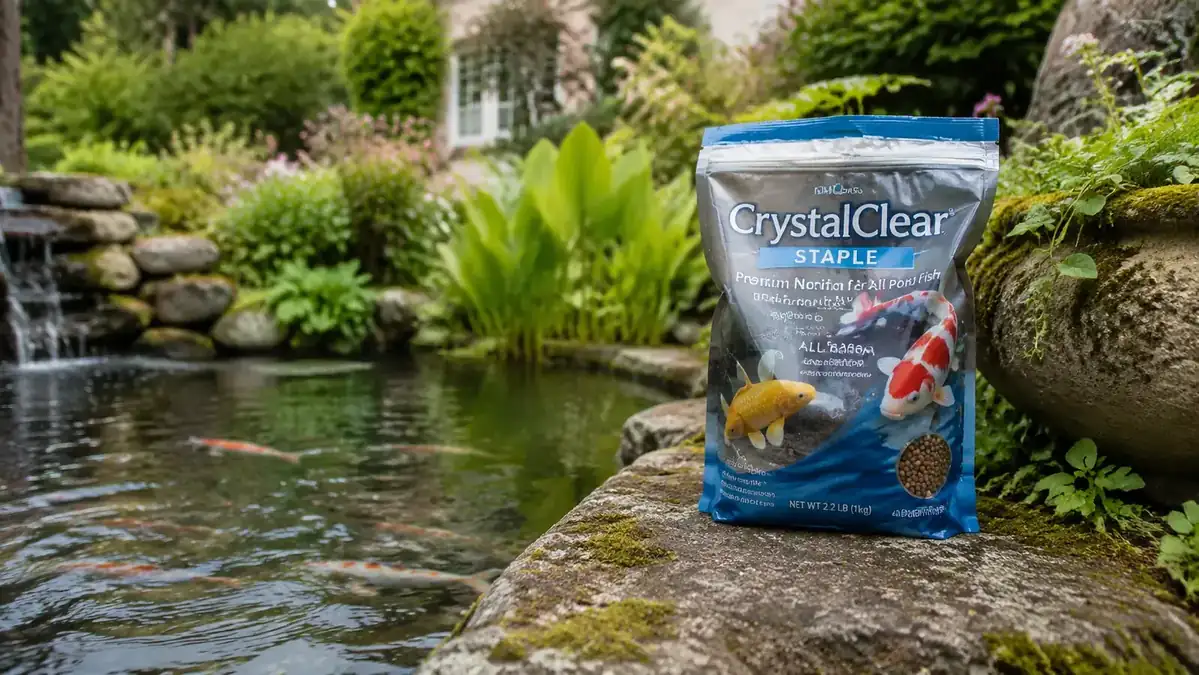
Thirty-two percent protein. That number is printed on the side of the CrystalClear Staple bag, and for most pond keepers, it is the beginning and end of the nutritional conversation. I have been keeping koi for thirty-two years, and I used to read that number the same way: high enough to feel good, not so high as to worry. It was only after watching two of my fish deteriorate one autumn, despite what I thought was careful feeding, that I started asking harder questions about what those label numbers actually mean, and when a food that looks correct on paper is quietly working against your fish.
This is not a review about whether CrystalClear Staple pellets are good food. They are. I still use them. But there is a version of using this food that helps your koi, and there is a version that harms them, and the difference between the two is not explained anywhere on the packaging. My koi are not show fish. They are old friends. Mei, my oldest, is a twenty-year-old Showa who has been in my pond since I moved to this house. When something goes wrong for Mei, I feel it. So I pay attention in a way that perhaps some reviewers do not.
The Quick Verdict
A well-made summer staple food with real nutritional value and reliable pellet buoyancy, but with important limitations that the packaging does not communicate: the protein level is wrong for cooler water, pellet batch consistency varies more than it should, and this food is actively harmful if used outside its correct seasonal window.
Amazon Check Today's Price →You have probably been feeding the right food at the wrong time. That is harder to fix than choosing the wrong food entirely.
CrystalClear Staple is a genuinely good summer pellet, but 'summer' means water above 18 degrees Celsius, not simply 'the months when you feel warm.' If you want to check the current price and decide whether it fits your pond and your season, the link below takes you straight to the Amazon listing.
Amazon Check Today's Price on Amazon →What Thirty-Two Percent Protein Actually Means for Your Fish
Crude protein percentage on a koi food label tells you the minimum protein content measured by nitrogen analysis. It does not tell you the quality of that protein, the digestibility of the protein sources, or whether your fish can actually process that protein given the temperature of your water. Those three things matter enormously, and none of them appear on the label.
Koi are cold-blooded animals. Their metabolism speeds up and slows down with water temperature in a way that is more dramatic than most people appreciate. At twenty-two degrees Celsius, a koi's digestive system is running efficiently. The enzymes responsible for breaking down protein are active, the gut is moving food through at a good pace, and the fish can use the nutrients it ingests. At thirteen degrees Celsius, those same enzymes are sluggish. Protein that cannot be digested properly does not simply pass through harmlessly. It becomes ammonia in the gut, which the fish must then excrete, putting stress on the kidneys and potentially on the gills. A food with thirty-two percent protein is genuinely nutritious at midsummer water temperatures. At autumn temperatures, it is a source of internal stress for the fish eating it.
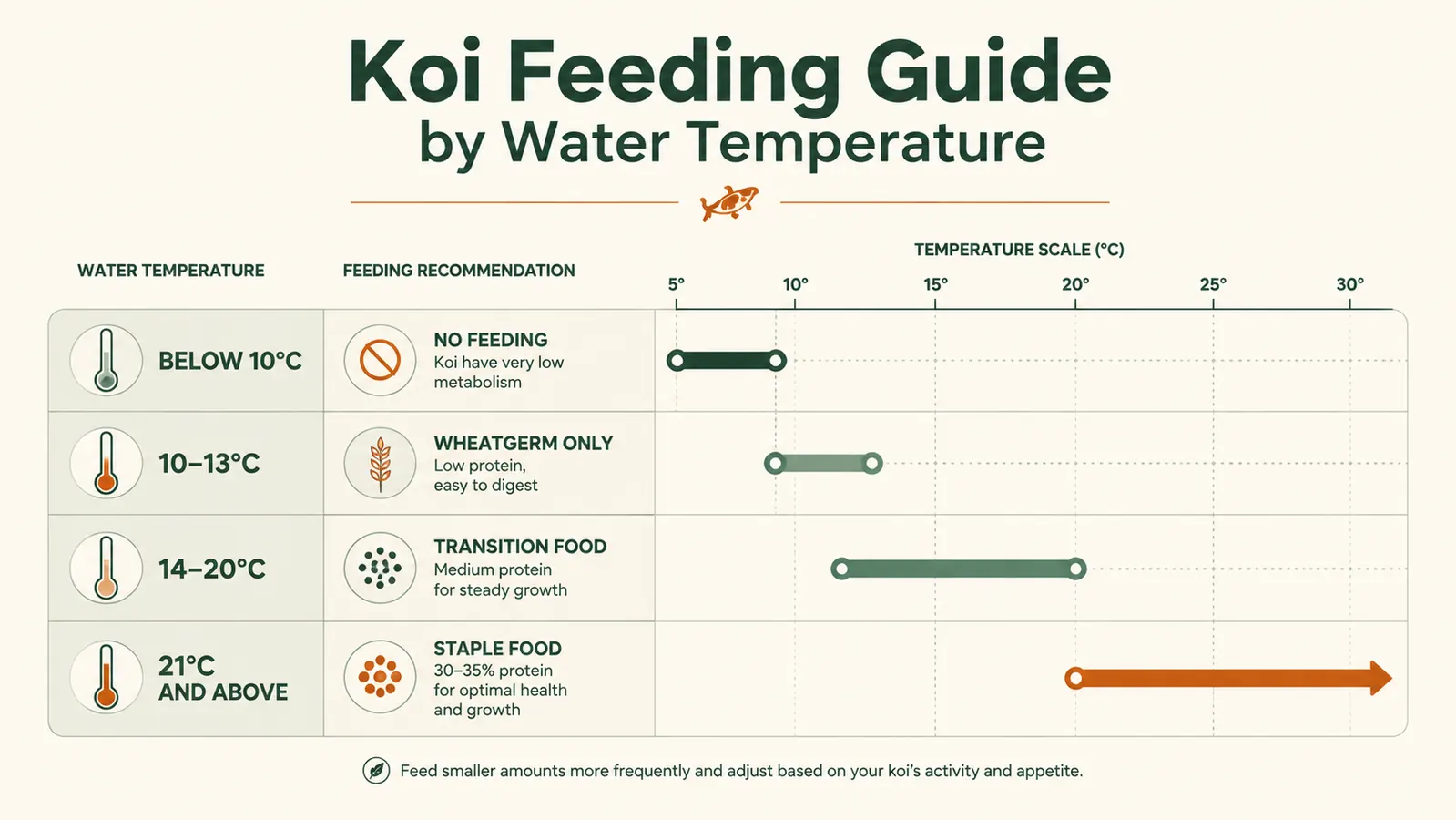
The label on CrystalClear Staple says to feed according to how much fish can eat in five minutes and to stop feeding when water temperature drops. What it does not specify is the temperature at which you should stop. Most koi keepers have heard the ten-degree threshold, below which you stop feeding entirely. But the critical window that this food does not address is the thirteen-to-seventeen-degree range, when koi are still active and coming to the surface, still accepting food eagerly, but where their digestive systems are no longer well-suited to processing a thirty-two-percent protein diet. A wheatgerm food with protein closer to twenty or twenty-two percent is what those temperatures call for, and switching too late in the autumn is one of the most common and invisible mistakes in koi keeping.
The Pellet Consistency Question: What I Found Between Bags
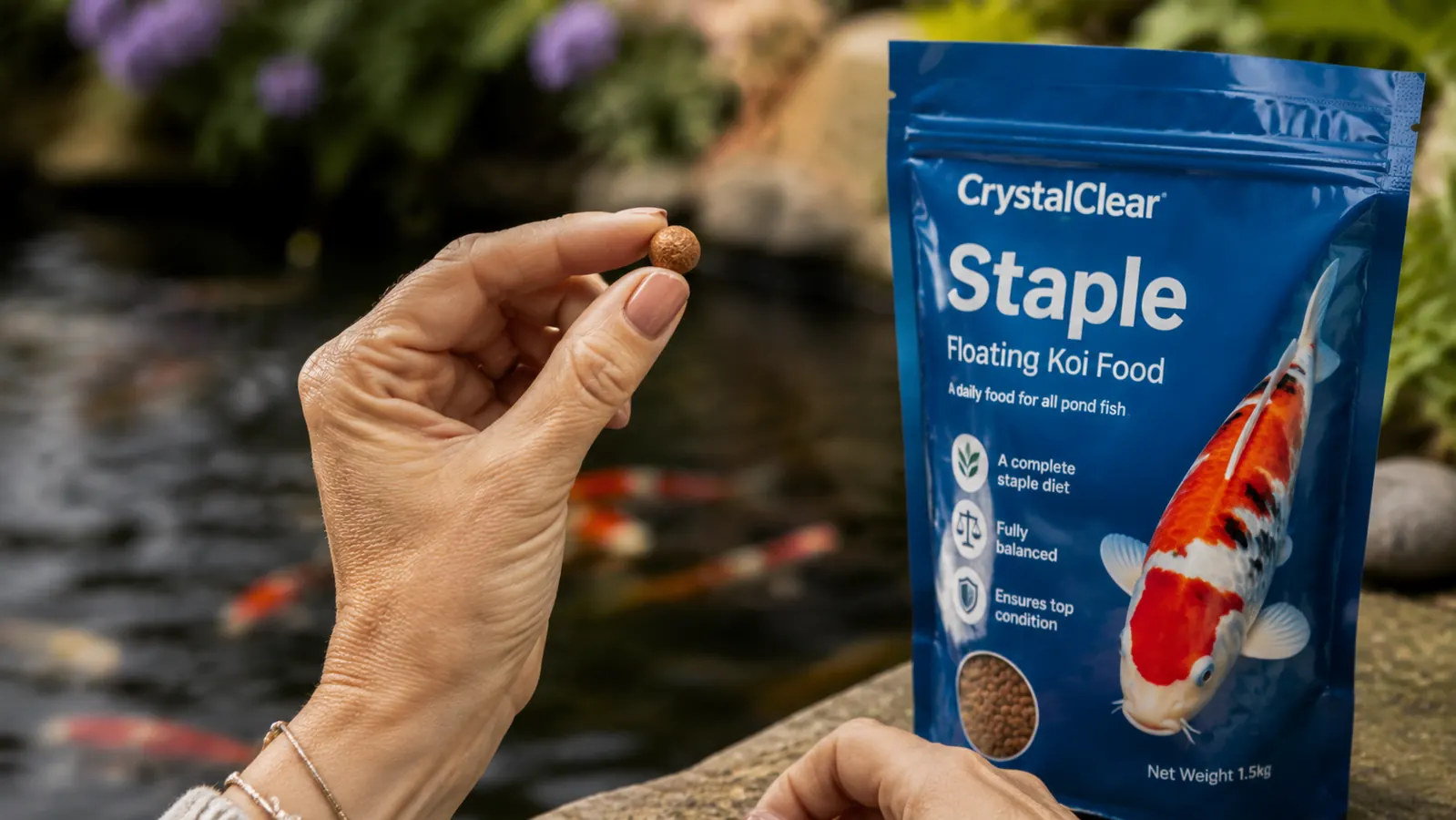
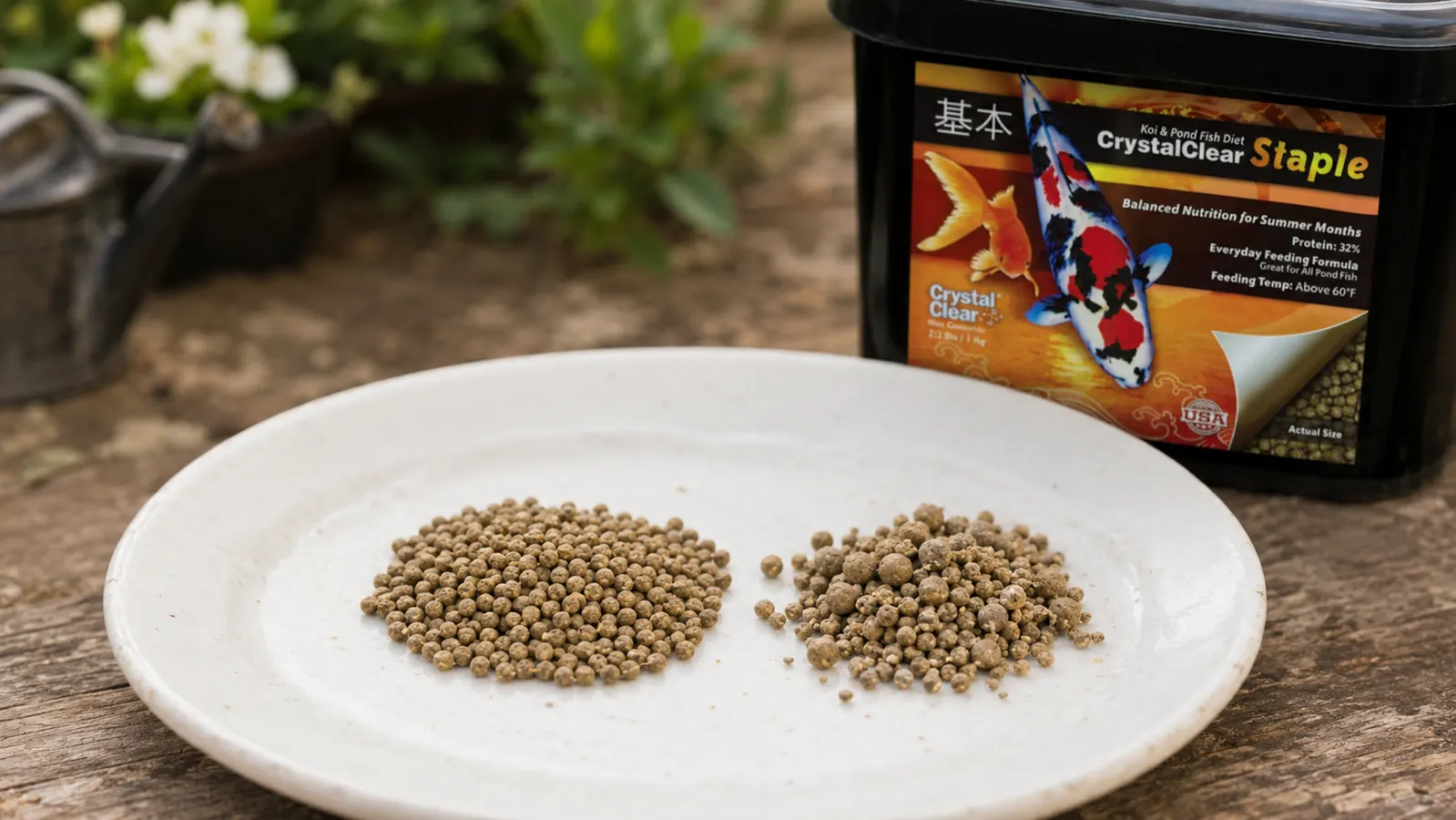
I have bought CrystalClear Staple eight times over the past four seasons. Six of those bags were consistent in pellet size, texture, and colour: small, round, caramel-brown pellets that floated immediately and stayed intact for well over five minutes. Two of those bags were noticeably different. The pellets in those bags had a wider range of sizes, with some pieces considerably smaller than others, and the colour was slightly lighter, suggesting either a variation in the fish meal content or a change in the baking temperature during manufacturing.
The fish noticed. This is not me being precious about pellet uniformity. Koi are surprisingly consistent in their feeding behaviour when a food is familiar to them, and both times I opened one of the inconsistent bags, my fish were more hesitant at the surface. They still ate, but the usual rush to the feeding spot was slower, and I saw more pellets being mouthed and rejected before being swallowed. I cannot tell you with certainty whether this was the size variation, a slight change in palatability, or something in the ingredient ratios. What I can tell you is that the behaviour was different, and it was different both times, with two separate bags, purchased at least a year apart.
This is not a reason to avoid CrystalClear Staple. But it is worth knowing that the product is not perfectly consistent between production batches, and if you open a bag and the pellets look or smell different from what you remember, pay attention to how your fish respond in the first few days.
The fish noticed. Both times I opened an inconsistent bag, my fish were slower to the surface and more hesitant at feeding. Koi tell you things the label cannot.
Summer Versus Autumn: The Feeding Mistake That Hurts Fish Slowly
The autumn feeding mistake is common enough that I want to spend time on it, because it is the scenario where CrystalClear Staple, used by a well-meaning keeper, causes genuine harm. The mistake is not dramatic. You will not walk out one morning and find dead fish because you kept feeding this food into October. What you will see, if you are looking carefully, is a gradual change: fish that become slightly less active through winter, fish that come out of dormancy in spring looking thinner than expected, perhaps a fish that does not come out of dormancy at all.
The mechanism is straightforward. Koi slow down as water cools. Their gut bacteria, which are essential for digestion, also slow down. Food that sits in a koi's gut undigested begins to ferment. Fermentation produces gases that cause internal bloating, and the bacterial byproducts can damage the gut lining over repeated exposures. A well-intentioned keeper who sees their fish still active and hungry in late September and continues to feed a high-protein food is setting up a slow internal problem that will not become visible until the following spring, by which point it is difficult to trace back to its cause.
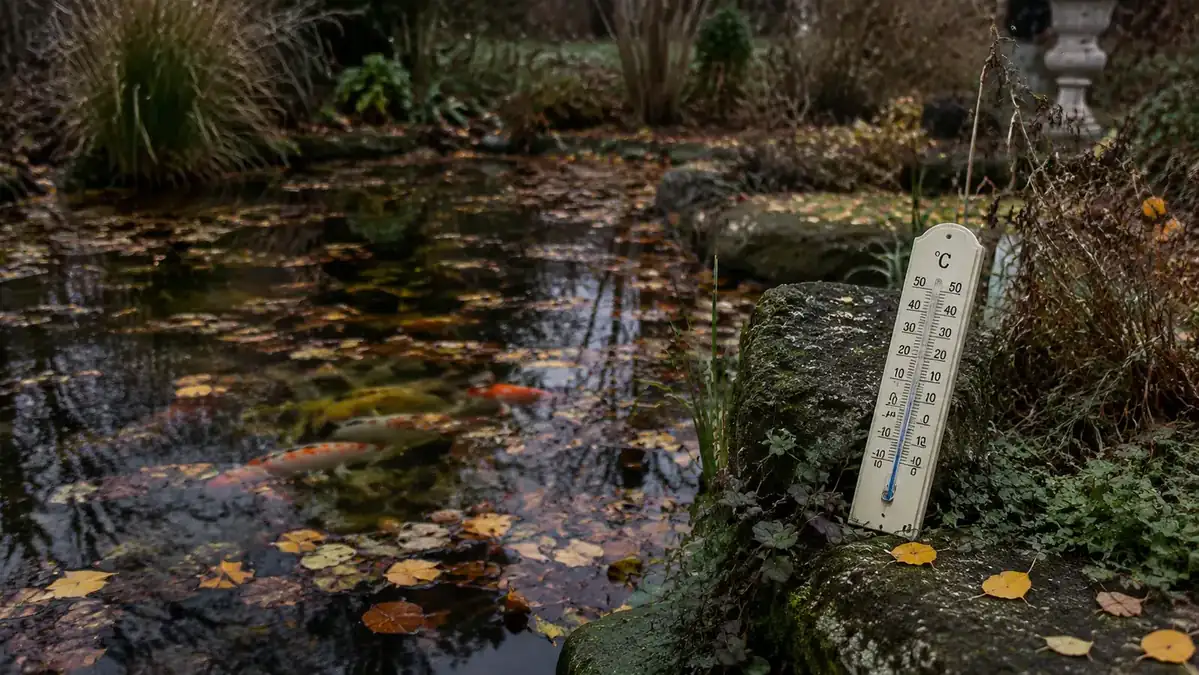
My rule, which I arrived at after the difficult autumn I mentioned, is to switch to a dedicated wheatgerm food when my pond thermometer reads seventeen degrees Celsius consistently, not waiting until it drops to ten. I take the thermometer reading at nine in the morning, which is the coolest point of the day. If it is below seventeen at that hour, I switch food regardless of how warm the afternoon becomes. CrystalClear Staple is not a transitional food. It is a midsummer food. Treat it that way and it serves your fish well. Extend it past its correct season and you are creating problems you will not see coming.
Who Should Not Use This Food at All
There are three situations where I would not reach for CrystalClear Staple, and none of them appear in the marketing language on the bag or in most online reviews.
The first is ponds in cooler climates where midsummer water temperatures rarely exceed eighteen degrees Celsius. If you are in Scotland, northern Scandinavia, or a high-altitude garden where the water stays cool even in July, a thirty-two-percent protein food is not appropriate for most of your season. You want a lower-protein food that your fish can digest at the temperatures they actually experience. A thirty-two-percent protein food designed for warm-water metabolism feeding fish that live in cool water is wasted nutrition at best and a digestive burden at worst.
The second situation is a pond recovering from a disease outbreak, particularly bacterial infections or parasitic treatment. During and after illness, koi have compromised digestive systems. A lower-protein, highly digestible food is much gentler on a recovering fish than the standard summer formula. If I have a fish that has been through a treatment course, I keep it on wheatgerm pellets for at least three weeks before returning to CrystalClear Staple.
The third situation, which I suspect will surprise some readers, is a new pond that is still establishing its biological filter. A heavily-fed pond with young, immature filtration cannot process the ammonia load produced by digesting a high-protein food. You will see nitrite spikes and water quality problems that look like filter failure but are actually a feeding problem. New pond, new filtration: feed lightly and use a lower-protein food until your bacterial colony is established, which takes a minimum of six to eight weeks. CrystalClear Staple is a food for a mature, stable pond ecosystem.
What the Label Gets Right, and What It Leaves Out
The thirty-two-percent protein figure is accurate and appropriate for its intended use. The fish meal as primary protein source is a genuinely good choice: fish meal provides a complete amino acid profile that plant-based proteins cannot match, and koi are primarily carnivorous despite being able to digest plant material. The fat content at four percent is correct for a staple food, giving enough energy without the liver stress that comes from high-fat feeding in warm water.
What the label leaves out is the carotenoid content. CrystalClear Staple contains astaxanthin and canthaxanthin, the pigments responsible for the orange and red colour enhancement that many keepers notice over a season. These are not labelled with specific amounts, which is frustrating if you are trying to compare this food against a dedicated colour-enhancing food. From my own observation, the colour support is real but modest. It maintains and slightly improves natural colour in fish that are already well-coloured. It will not transform a pale fish into a vivid one. A specialist colour food with a higher carotenoid dose is a different product category.
The label also does not mention whether the food is suitable for goldfish, which is a question I see asked frequently. The short answer is yes, with a caveat. For goldfish over about fifteen centimetres, the pellet size works well enough. For smaller fancy goldfish, the pellets are unwieldy and you will see a lot of mouthing and rejecting before pieces are small enough to swallow. Small goldfish need a smaller pellet format, and this food does not come in a small pellet option in the standard UK and US market versions.
The Case for Using It Correctly
I want to be fair to CrystalClear Staple, because I think it is genuinely a good product that is often used incorrectly and then blamed for problems it did not cause. Used properly, which means in a mature pond, in water above eighteen degrees, from late spring through late summer, with a switch to wheatgerm when temperatures begin to fall, this food does what it promises. Pellets are consistent in the majority of bags. Fish accept them readily. Water quality is not compromised by excess dissolving or fine particle release. Colour support is gentle and real.
If you are interested in how to manage feeding across the whole year, including when to introduce this food in spring and when to step away from it in autumn, I have written a practical guide on how to feed koi properly through every season that walks through the temperature thresholds, the food transitions, and the signs that your fish need a diet adjustment.
And if you want to see how CrystalClear Staple compares directly against the most popular alternative in its category, I have also put together a side-by-side look at CrystalClear Staple versus Tetra Pond Sticks that covers protein levels, palatability, and water clarity impact.
What I Liked
- Thirty-two percent protein from fish meal is nutritionally appropriate for koi in warm water above 18 degrees Celsius
- Pellets float reliably and stay intact long enough to net out uneaten food, keeping water cleaner
- Colour support from natural carotenoids is real and observable over a full season in already well-coloured fish
- Fish accept the food readily without a lengthy habituation period
- Good value compared to specialist koi foods in the same quality tier
Where It Falls Short
- Protein level is too high for water below 17 degrees Celsius, and the label does not specify a temperature threshold clearly enough
- Pellet size and colour vary noticeably between some production batches, affecting palatability
- No small pellet option available for smaller goldfish or juvenile koi
- Carotenoid content is not listed on the label, making it impossible to compare against colour-enhancing alternatives accurately
- Not suitable during disease recovery or in ponds with immature filtration, with no guidance on this in the product description
Who This Food Is Right For
CrystalClear Staple is the right food if you have a pond with a mature biological filter, koi or larger goldfish over about fifteen centimetres, water temperatures reliably above eighteen degrees during your feeding season, and you are willing to switch to a dedicated wheatgerm food when temperatures begin to fall in early autumn. Under those conditions, it does everything the marketing suggests and does it well. It is a food for a keeper who pays attention to their pond and is not looking for a one-bag-fits-all solution throughout the year.
Who Should Skip It
If you live in a cooler climate where summer pond temperatures rarely reach eighteen degrees, this food is not well-matched to the water your fish actually live in. If your pond is less than three months old and you are still waiting for the filter bacteria to establish, hold off until the system is stable. If you have fish recovering from illness, stay on wheatgerm until they are fully active and eating normally. And if your pond is primarily small fancy goldfish, look for a smaller pellet format rather than expecting fish to manage a six-millimetre pellet that their mouths were not built for.
None of these are criticisms of the food itself. They are simply the situations where the label's silence about its own limitations costs the keeper time, money, and sometimes a fish. The label is not dishonest. It just assumes a level of background knowledge that many new pond keepers do not yet have, and that is worth saying plainly.
Good food, used correctly, is one of the simplest things you can do for your pond. Used incorrectly, even the best food causes problems you will not see coming.
If CrystalClear Staple is the right fit for your pond and your season, the current price on Amazon is worth checking. If you are still unsure whether it is the right choice given your water temperature or your fish, the seasonal feeding guide linked above will help you work that out before you commit to a bag.
Amazon Check Today's Price on Amazon →